


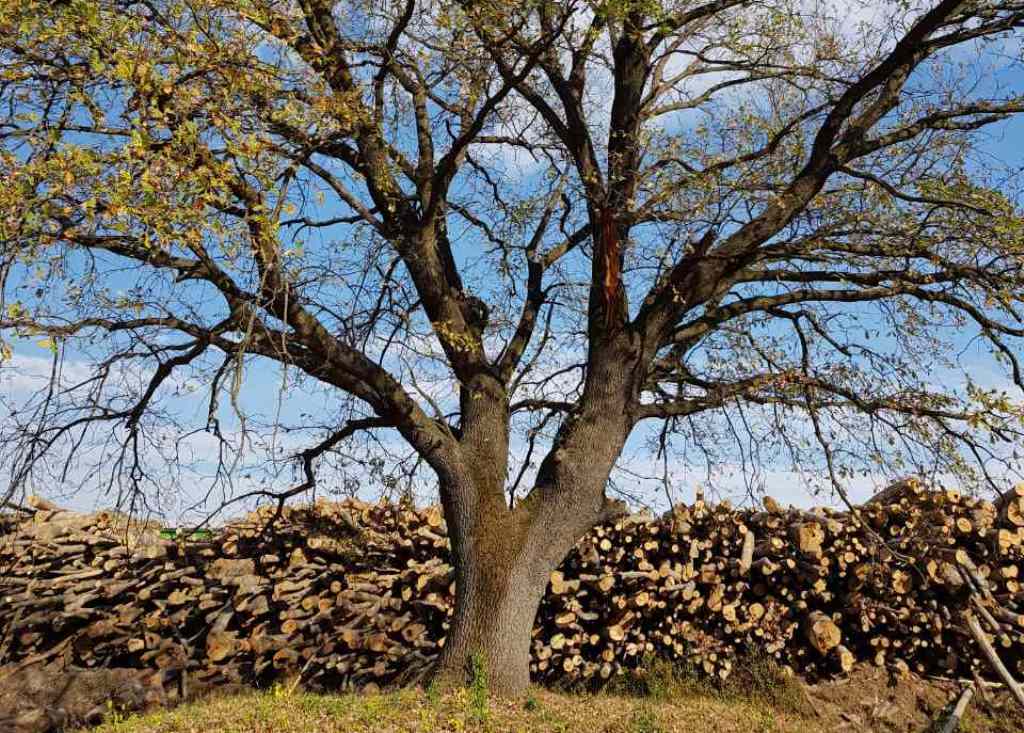
The economic importance of using wood pellets lies in their potential to help reduce energy poverty among European citizens. Their use in various economic sectors, such as services, agriculture and industry, can increase profitability, while the pellet industry contributes to many rural and regional economies across Europe by creating jobs and supporting the mobilisation and development of local resources.
Economic Benefits of Using Wood Pellets
The economic benefits of wood pellets are also reflected in their affordability and relatively stable prices compared with fossil fuels. Since 2007, pellet prices have been, on average, 50% lower than heavy fuel oil prices and 40% lower than oil prices in EU member states that are leaders in the pellet market.
At the household level, the savings achieved by choosing wood pellets can be significant. Pellet stoves and boilers convert more than 85% of the energy contained in the fuel into heat, allowing the initial investment in heating equipment to be recovered in approximately four years, after which annual savings of around €400 may be achieved compared with heating with fossil fuels.
Wood Pellet Production Technology
The wood pellet production process consists of several key stages: receiving the raw material (wood logs of the appropriate quality), crushing and reducing the logs to wood chips of approximately 40 × 40 mm, further grinding into smaller particles, drying the material using combustion products in rotary drum dryers, additional grinding of the dried material, pressing and pelletising, cooling and packaging.
At the beginning of the process, the raw material – wood logs – is crushed and reduced in specially designed machines to wood chips with a maximum size of approximately 40 × 40 mm.
The prepared wood chips are then ground into smaller particles, screened through a Ø14 mm sieve and transported to the dryers.
In rotary drum dryers, excess moisture above 15% is removed from the wood particles by circulating a mixture of cleaned combustion gases – generated by burning wood chips in a heat generator – and ambient air.
Once the material reaches the appropriate moisture content of 10–15%, it is pneumatically transported to a mill, where it is ground further and screened through sieves with Ø6 mm openings.
This additional size reduction provides better homogenisation and mixing of the wood particles before the pressing and pelletising process inside the pellet press.
The wood particles are compressed using rollers, which mechanically press the material through a die, forming the finished pellets. Mechanical compression and friction within the die generate a significant amount of heat, which is subsequently removed during the cooling process.
Cooling is carried out by forcing ambient air through the pellet cooler with the help of fans.
Once the cooling process is complete, the pellets can be efficiently packaged in 15 kg bags or 1,030 kg jumbo bags.
The production process is completed by transporting the finished pellets internally to the storage warehouse or loading them directly onto transport vehicles for delivery to customers.
The main characteristic of wood pellet production is the use of clean, chemically untreated wood and sawdust, without the use of any chemical binding agents.
The finished pellets are cylindrical in shape, with a diameter of 6–8 mm and a length of 10–30 mm. Their very low moisture content (less than 10%) enables efficient combustion, producing only around 1% ash.
Wood pellets are considered a natural and environmentally responsible energy source. Like other forms of woody biomass, they can contribute to lower emissions compared with fossil fuels when produced and used appropriately. Their environmental impact depends on factors such as the source of the wood, production process, transport and combustion efficiency.