


The most commonly used renewable energy source is neither wind nor solar energy, as is often assumed.
In fact, it is wood. Wood is used in various forms, including biomass, sawdust and wood pellets. 1
Wood Pellet Production and Sales Trends
Wood pellet production continues to grow year by year, supported by the increasing use of biomass as a source of clean energy. Demand for wood pellets is also increasing, while traditional heating methods are gradually becoming less significant.
The wood pellet market is influenced by political, social and environmental factors, making relationships with customers, suppliers and other partners increasingly complex. For this reason, quality control and standardisation have been introduced throughout Europe. 2
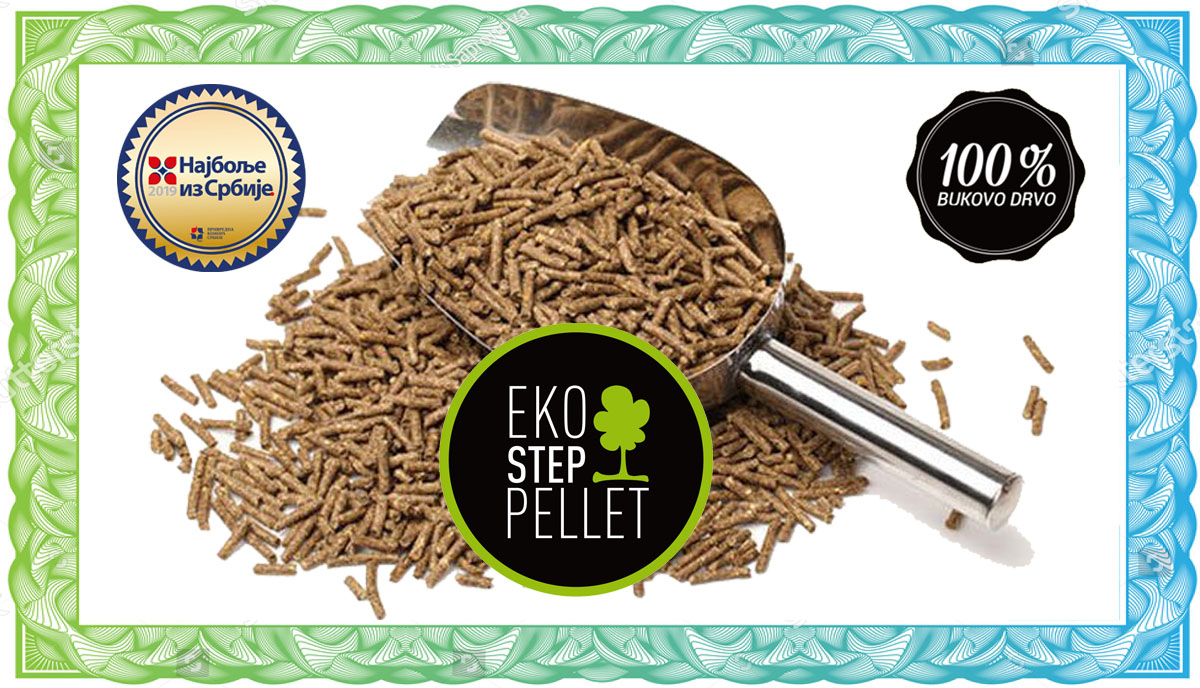
EKO STEP PELLET produces pellets from 100% beech wood and is certified according to the ENplus A2 standard.
Although demand for wood pellets in Europe declined during the previous year due to a somewhat milder winter, EKO STEP PELLET maintained the same production volume.
The wood pellet market was affected by events related to the coronavirus pandemic, with a growing number of biomass processing facilities closing. This also created challenges in the logistics and supply of raw materials. 3
EKO STEP has maintained a stable, long-term partnership with JP Srbijašume, one of its key suppliers of first-class raw materials.
All of this enables us to provide our customers with a suitable product in the required quantities and to maintain a strong position in the wood pellet market. Our commitment to quality was also recognised with the Serbian Chamber of Commerce “Best of Serbia” Award for 2019 for the introduction of a new brand, an achievement of which we are very proud.
1 Foltynowicz – Pellet – a Key of Biomass Energy
2,3 Hawkins Wright – Forest Energy Monitor
Authors:
Andrijana Denić
Nataša Milić